
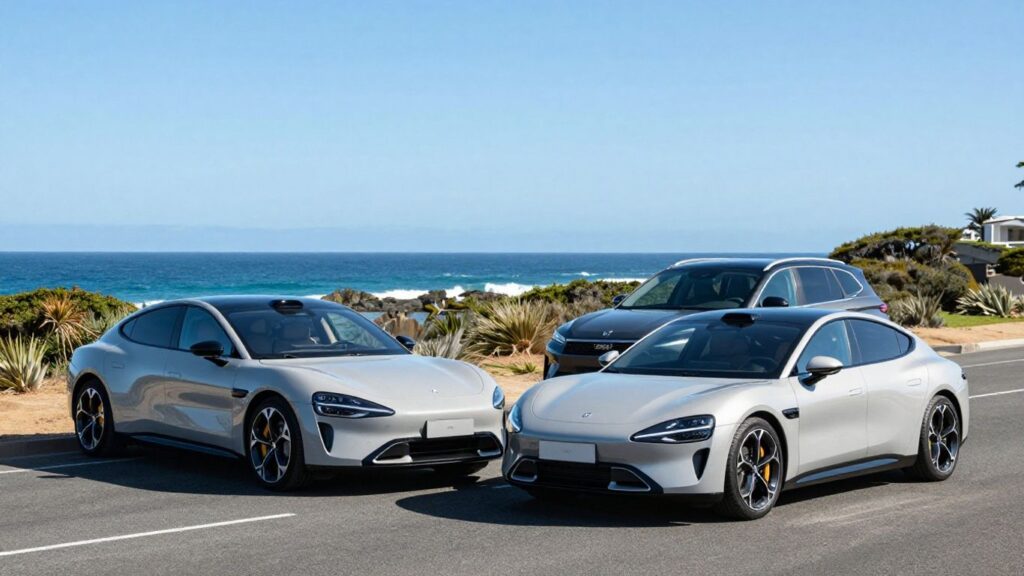
With more electric cars arriving in Australia, picking the right one can feel tricky. Here’s what you should remember before you buy:
Key Takeaways
- There are more electric cars available in Australia than ever before.
- Real-world driving range is often less than what’s claimed by car makers.
- Charging at home is usually cheaper and easier than using public stations.
- Check battery warranty and service history, especially for used EVs.
- Take a test drive to see how the car fits your daily life.
1. Tesla Model Y
It’s no surprise the Tesla Model Y is still a massive hit here in Australia. Honestly, it just ticks so many boxes for families and anyone needing a bit of space. Since it first landed, it’s been the top-selling electric car, and it’s easy to see why. It feels like Tesla took everything good about the Model 3 and just made it bigger and more practical.
What really sets it apart is its versatility. Whether you’re doing the daily school run, heading out for a weekend adventure, or just need to haul a decent amount of gear, the Model Y handles it. The cargo space is seriously impressive, especially when you fold down the rear seats – you can fit a surprising amount in there. Plus, Tesla’s charging network makes road trips a lot less stressful than with some other brands.
Here’s a quick look at the different versions you can get:
- Rear-Wheel Drive: The entry-level option, great for everyday driving and city commutes.
- Long Range AWD: Offers a good balance of range and all-wheel-drive capability, making it a solid all-rounder.
- L: This one’s a bit newer, boasting a longer wheelbase and adaptive suspension for a smoother ride, plus it has the longest range of the lot.
- Performance: For those who want a bit more zip, this variant comes with upgraded suspension and motors for a sportier feel.
The Model Y really is the go-to electric SUV for a lot of Aussies right now. It’s not the cheapest EV out there, but the combination of range, practicality, and access to Tesla’s charging infrastructure makes it a pretty safe bet for most people. If you’re looking for an electric car that can do pretty much everything without much fuss, the Model Y is definitely worth a look. You can check out the latest pricing and specs for the different models.
2. BYD Sealion 7
The BYD Sealion 7 is BYD’s fourth electric car to hit the Australian market, and it’s aiming to give the Tesla Model Y a real run for its money. It’s a pretty sharp-looking SUV, borrowing some design flair from the BYD Seal, and it’s about the same size as the popular Tesla.
This SUV comes in two main flavours: the rear-wheel-drive Premium and the all-wheel-drive Performance. Both models pack an 83 kWh battery, which is a decent size for this class. The Premium version will get you an estimated 482 km on a single charge, while the Performance model, with its extra grunt, is rated for around 456 km.
Here’s a quick look at the specs:
| Variant | Starting Price (approx.) | Driving Range (WLTP) | Battery Size |
|---|---|---|---|
| Premium | $54,990 + ORC | 482 km | 83 kWh |
| Performance | $63,990 + ORC | 456 km | 83 kWh |
It’s interesting to see BYD positioning the Sealion 7 below the Model Y in terms of price, which could be a smart move. There’s also talk of a more affordable ‘Dynamic’ variant potentially coming down the track, which would be great for those on a tighter budget.
The Sealion 7 is BYD’s latest attempt to capture a slice of the booming electric SUV market in Australia. With its blend of style, decent range, and competitive pricing, it’s definitely one to consider if you’re looking at options like the Tesla Model Y.
It’s not just about the numbers though. BYD has been steadily improving its offerings, and the Sealion 7 feels like a more refined package than some of their earlier models. The interior is generally well-appointed, offering a comfortable space for families. If you’re after a new electric SUV that offers good value and a solid feature set, the BYD Sealion 7 is certainly worth a closer look. You can find out more about the BYD Sealion 7 Premium on their website.
3. Zeekr 7X
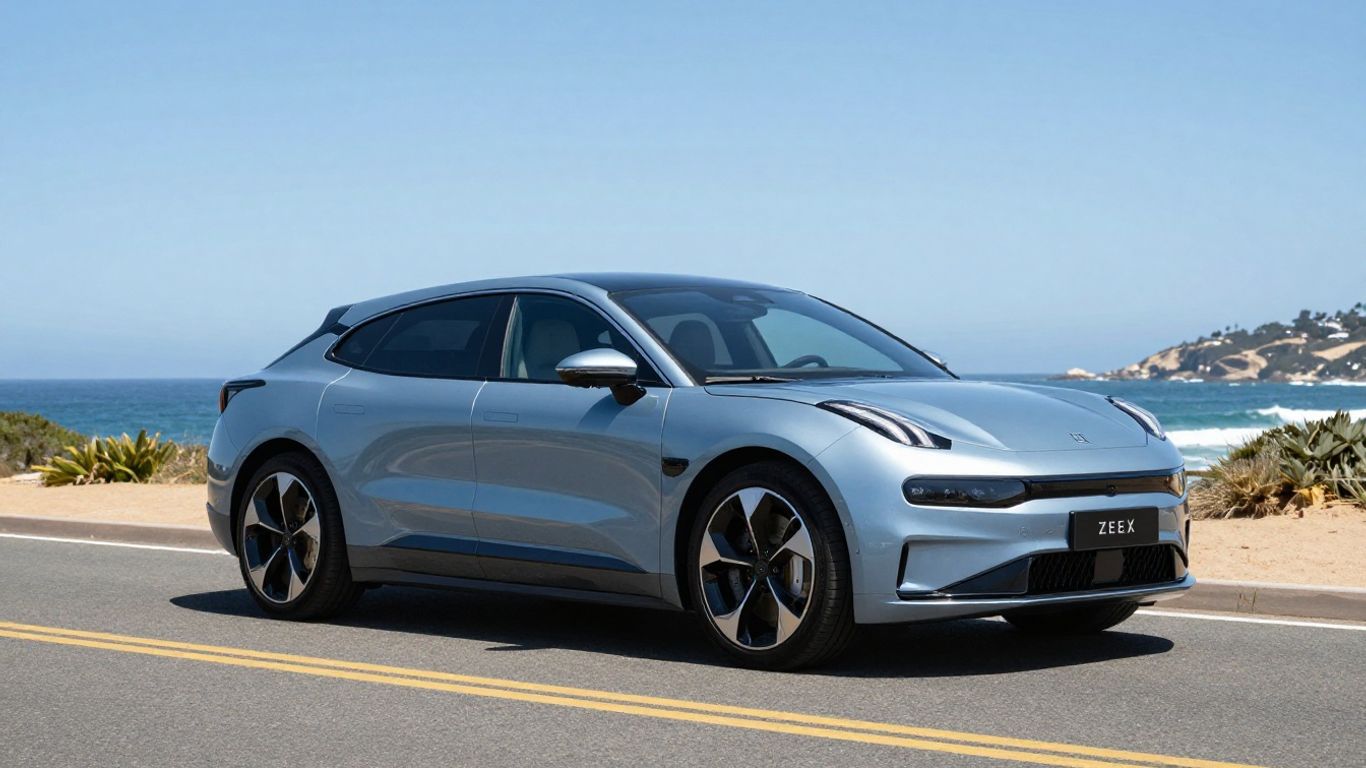
The Zeekr 7X is shaping up to be a pretty big deal in the electric SUV market here in Australia. It’s built on that fancy 800-volt architecture, which is a big deal for charging speeds. Seriously, you can go from 10% to 80% charge in about 13 to 16 minutes if you can find a charger that can handle it. That’s faster than most people can grab a coffee.
There are a few different versions available, so you can pick what suits you best. They’ve got a standard rear-wheel drive, a long-range rear-wheel drive, and a zippier all-wheel drive performance model. The range is pretty decent across the board, especially with the bigger battery options.
Here’s a quick look at the specs:
| Variant | Starting Price | Driving Range | Battery Size |
|---|---|---|---|
| Zeekr 7X RWD | $57,900 | 480 km | 75 kWh |
| Zeekr 7X Long Range RWD | $63,900 | 615 km | 100 kWh |
| Zeekr 7X Performance AWD | $72,900 | 543 km | 100 kWh |
It’s positioned above the smaller Zeekr X, and it looks like it’s going to be the most popular model from Zeekr. The interior is meant to be pretty plush too, which is always a nice bonus. If you’re looking for a solid electric SUV with fast charging capabilities, the Zeekr 7X is definitely one to check out. You can find more details on the Zeekr 7X Long Range RWD if you want to dig deeper.
The 800-volt system is a game-changer for EVs, cutting down wait times significantly. It means less time plugged in and more time on the road, which is exactly what most drivers want. This tech is becoming more common, but Zeekr is really pushing it with the 7X.
4. Tesla Model 3
The Tesla Model 3 has been a fixture on Australian roads since 2019, and it’s easy to see why. It’s still the top-selling electric sedan here, and for good reason. Tesla has kept it fresh with ongoing tweaks and software updates, and the significant refresh from 2024 really upped the ante with better handling, a sleeker front end, and importantly, more driving range.
Inside, you’ll find some interesting changes. There’s now a screen for the back seat passengers, which is a nice touch. The gear selector stalk has vanished from the steering wheel – you now swipe on the touchscreen to change gears. While the indicator stalk was initially removed, thankfully, Tesla brought it back after some feedback.
For those who want a bit more zip, the Model 3 Performance variant comes with an upgraded drive unit, sportier front seats, and adaptive suspension. It’s got those little touches that make it stand out from the other models.
Here’s a quick look at the specs for the current lineup:
| Variant | Starting Price | Driving Range | Battery Size |
|---|---|---|---|
| Model 3 Rear-Wheel Drive | $54,900 | 520 km | 60 kWh |
| Model 3 Long Range RWD | $61,900 | 750 km | 80 kWh |
| Model 3 Performance | $80,900 | 571 km | 80 kWh |
The Long Range RWD variant is particularly noteworthy, boasting an impressive 750km range, making it Tesla’s longest-range EV to date. This extended range definitely makes those longer trips a lot less stressful. If you’re looking for a solid electric sedan that balances performance, range, and tech, the Model 3 is still a really strong contender. You can check out more details on the 2026 Tesla Model 3 Long Range Rear-Wheel Drive if you’re curious about its extended range capabilities.
While the removal of physical stalks might take some getting used to, the overall package remains compelling. The Model 3 continues to offer a refined driving experience and a user-friendly interface that many Australians have come to appreciate.
5. Geely EX5
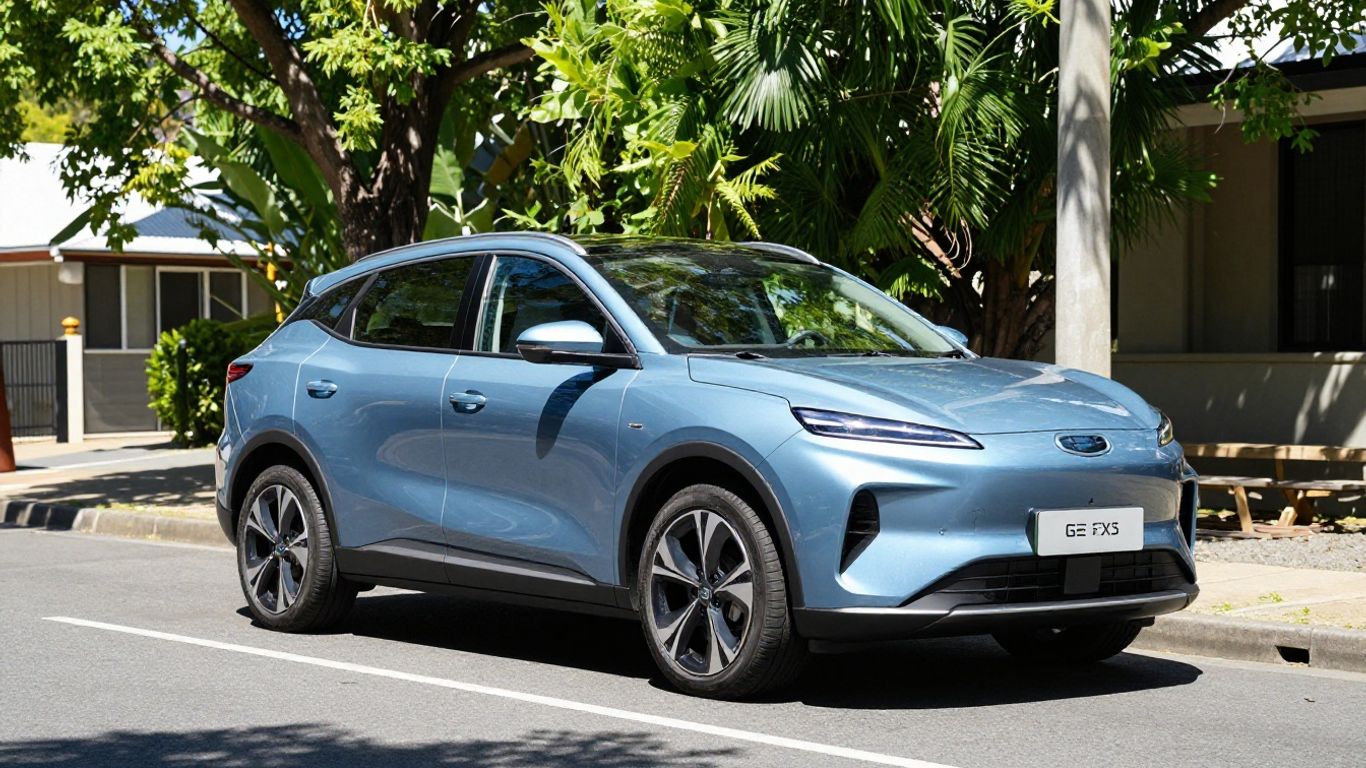
Geely’s EX5 is a bit of a dark horse in the electric SUV scene here in Australia. It’s aiming to go head-to-head with the big players, and honestly, it’s not doing a bad job of it. This SUV offers a solid blend of practicality and modern tech without completely emptying your wallet.
Geely, you know, the mob that owns Volvo and Polestar, has put together a pretty compelling package with the EX5. It’s a mid-size SUV, so it’s got enough room for the family and all your weekend gear. They’ve even given it a bit of a boost recently with a slightly larger battery, which is always a good thing when you’re talking about electric cars.
Here’s a quick look at what you get:
- Range: The updated models boast a WLTP range of up to 475km, which is pretty decent for most commutes and even a fair few longer trips. The Inspire variant is rated slightly lower at 450km, but still very usable.
- Battery: Both variants are packing a 68 kWh battery. It’s not the biggest out there, but it’s a good size for this class of vehicle.
- Performance: You’re looking at a 160kW motor. It’s not going to pin you back in your seat like some of the sportier EVs, but it’s more than enough for getting around town and merging onto the highway.
- Price: The EX5 starts at a competitive $40,990 before on-road costs for the Complete trim, with the Inspire model kicking off at $44,990. This makes it a really attractive option if you’re looking for value. You can check out the latest pricing details here.
The Geely EX5 is trying to offer a lot of car for the money. It’s got a decent range, a good-sized battery, and enough space for most families. While it might not have the brand cachet of some European rivals, its pricing and updated specs make it a serious contender.
One thing to note is the Inspire model comes with some pretty fancy extras, like massaging front seats. That’s usually something you’d find in cars costing a fair bit more, so it’s a nice touch from Geely. If you’re after a practical, well-equipped electric SUV that won’t break the bank, the EX5 is definitely worth a look. It’s a strong showing from Geely as they expand their presence in the Australian market, and it’s good to see them bringing competitive EVs down under.
6. Kia EV5
The Kia EV5 is shaping up to be a pretty solid contender in the mid-size electric SUV market here in Australia. It’s got that familiar boxy Kia EV look, which, let’s be honest, works pretty well for maximising interior space. Think of it as being about the same size as a regular petrol Kia Sportage, but with all the electric benefits.
Kia is offering the EV5 in a few different flavours, so you can pick what suits you best. They’ve got an entry-level Air model, which you can get with either a standard or a long-range battery. Then there are the Earth and GT-Line variants, which come with the long-range battery and all-wheel drive. An updated version is expected before the end of 2026, so it might be worth holding out if you can.
Here’s a quick look at what you can expect:
- Kia EV5 Air Standard Range: Around 400 km of range from an 64 kWh battery.
- Kia EV5 Air Long Range: Gets you about 555 km on a charge with an 88 kWh battery.
- Kia EV5 Earth: Offers roughly 500 km of range, also with an 88 kWh battery.
- Kia EV5 GT-Line: Expect around 470 km of range from its 88 kWh battery.
One of the neat features Kia is bringing across from its other EVs is V2L (Vehicle-to-Load) capability, which is handy if you need to power something up on the go. It’s built on a new 400 V platform called N3-ek, which is a bit different from the E-GMP platform you see in some other Kia models. If you’re after a practical electric SUV that doesn’t break the bank, the EV5 is definitely worth a look. You can check out some of the latest pricing and features for the different trims.
7. BYD Atto 2
Alright, let’s talk about the BYD Atto 2. This little SUV is shaping up to be a real contender in the Australian market, especially if you’re looking for something that won’t break the bank. It’s currently positioned as Australia’s cheapest new electric SUV, which is a pretty big deal when you’re trying to make the switch to electric.
BYD is really pushing the value here. You’re looking at a starting price around the $31,990 mark before you even think about on-road costs. For that, you get a decent 45.1kWh battery, giving you a range of up to 312km. It’s not going to win any long-distance races, but for city driving and weekend trips, it should be more than enough for most people. Plus, it comes with a pretty neat 12.8-inch rotating touchscreen – a bit of a party trick, that.
Here’s a quick look at what you can expect:
- Range: Up to 312km on a single charge.
- Battery: 45.1kWh capacity.
- Infotainment: A 12.8-inch rotating touchscreen.
- Price: Starting from $31,990 (before on-road costs).
The Atto 2 is BYD’s answer to making electric SUVs more accessible. It focuses on providing the essentials with a few modern touches, making it a sensible choice for budget-conscious buyers. It’s a solid step into the EV world without a hefty price tag.
There are a couple of variants to consider, but they both seem to pack the same 51 kWh battery, offering a WLTP range of 345 km. The main differences will likely be in the trim and features, so it’s worth checking out the BYD Atto 2 Dynamic and Premium options to see which one suits you best. It’s a smart move by BYD to offer more affordable options in the growing EV space.
8. Jaecoo J5
The Jaecoo J5 is shaping up to be an interesting contender in the compact electric SUV market here in Australia. It’s pitched as a bit of a premium offering from Chery, with a focus on being pet-friendly, which is a neat little niche.
This little SUV comes pretty well equipped for the price point. You’ve got a couple of different trim levels to consider, the Track and the Summit, each with its own driveaway price. The Track model kicks things off at $25,990 driveaway, while the Summit will set you back $29,990 driveaway. Keep in mind these prices are for the driveaway DAP, so optional extras might add a bit more to the final figure.
Here’s a quick look at what you can expect:
- Range: The J5 EV Track offers a driving range of 402 km on a single charge, powered by a 61 kWh battery. This should be plenty for most daily commutes and even a decent weekend trip.
- Features: While specific features can vary between the trims, Jaecoo is aiming to pack in a good amount of tech and comfort for the money.
- Pet-Friendly Focus: This is a unique selling point. Expect features designed to make travelling with your furry friends easier and safer.
It’s worth noting that the final features list is still subject to confirmation, so it’s always a good idea to check the latest details when you’re ready to buy. If you’re after a compact EV that doesn’t break the bank and has a few unique touches, the Jaecoo J5 is definitely one to keep an eye on. You can find more details on the 2026 Jaecoo J5 EV review to get a better sense of its capabilities.
The Jaecoo J5 is built on a new platform that aims to improve on earlier Chery EV architectures, suggesting a step forward in refinement and efficiency for the brand’s electric offerings.
9. BYD Atto 1
Alright, let’s talk about the BYD Atto 1. This little ripper is BYD’s entry-level electric car, and it’s aiming to be the most affordable EV on the Australian market. It’s a no-frills option for those who want to go electric without breaking the bank.
When it comes to specs, the Atto 1 comes in two flavours: Essential and Premium. The Essential model gets you a 30 kWh battery, which BYD says is good for about 220 km of range. The Premium version steps things up with a larger 43 kWh battery, pushing the range out to a more respectable 310 km. It also gets a bit more zip, with quicker acceleration.
Here’s a quick look at the numbers:
| Variant | Starting Price | Driving Range (WLTP) | Battery Size |
|---|---|---|---|
| Essential | $23,990 | 220 km | 30 kWh |
| Premium | $27,990 | 310 km | 43 kWh |
It’s worth noting that the Premium model offers a decent boost in range and performance, making it a bit more practical for longer trips. For those looking for a basic city car or a second runabout, the Essential might be enough. It’s a pretty straightforward car, really. You’re not getting a heap of fancy tech, but you are getting a new electric car for less than the price of many used petrol cars. It’s a solid choice if your budget is tight and you just want to get into an EV. You can check out the BYD ATTO 1 Premium model for more performance details.
This car is all about accessibility. BYD is trying to make electric driving a reality for more Australians, and the Atto 1 is their way of doing that. It’s not trying to be a luxury vehicle or a performance machine; it’s simply an affordable way to get around town electrically.
So, if you’re after a budget-friendly electric vehicle and don’t need a massive range or all the bells and whistles, the BYD Atto 1 is definitely worth a look. It’s a sensible option for first-time EV buyers or anyone looking to downsize their motoring costs.
10. MG S5
The MG S5 EV is shaping up to be a pretty sensible choice for folks looking for a new electric car without breaking the bank. It’s basically a successor to the old MG ZS EV, but it’s built on a newer platform, which means it gets some decent upgrades.
This car is designed to be a practical option for everyday driving. It comes in two main flavours, both rear-wheel drive, with different battery sizes to suit your needs. You’ve got the Excite 49, which is the more affordable entry point, and the Essence 62, which gives you a bit more range for those longer trips.
Here’s a quick look at what you get:
- MG S5 EV Essence 49 kWh: This one starts around $41,990 and offers a driving range of about 350 km. It’s a good option if you don’t do a huge amount of driving each day.
- MG S5 EV Essence 62 kWh: Stepping up, this variant will set you back about $46,990 and gets you a driving range of around 450 km. This is probably the sweet spot for most people.
MG has also put some effort into the interior and infotainment system, making it a bit nicer to be in than some of the older models. It’s not going to blow your socks off with luxury, but it’s functional and easy to use. If you’re after a straightforward electric SUV that won’t cost a fortune, the MG S5 EV is definitely worth a look. You can check out the latest pricing and specs on their website.
Conclusion
Choosing from the top electric cars Australia has to offer in 2026 is a lot easier now, with so many brands and models available. Whether you want something for the family, a compact city runabout, or just the best value, there’s a solid option for everyone. Take your time to check out what matters most for you—like range, charging, and price. Try to test drive a few, and don’t forget to think about how you’ll charge at home or on the go. With all these choices, it’s a good time to make the switch to electric.
Frequently Asked Questions
Are electric cars cheaper to run than petrol cars?
Most of the time, yes. Charging at home can save you money, and electric cars often need less fixing because they have fewer parts.
How far can I really drive an electric car?
The distance you get depends on how you drive and the weather. The number in ads is usually higher than what you’ll get day-to-day.
Can I charge an electric car at home with a normal power point?
Yes, you can. But using a special home charger is faster and works better if you need to charge often.
How long do electric car batteries last?
Most batteries last many years. They slowly lose power, but most come with a long warranty—often around eight years.
Are electric cars safe?
Yes. Electric cars have to pass the same safety tests as petrol cars. Just remember they’re very quiet, so watch out for people walking or riding bikes.
What should I check before buying a used electric car?
Look at the battery warranty, how you’ll charge it, and the service history. Make sure the car suits your daily trips.