
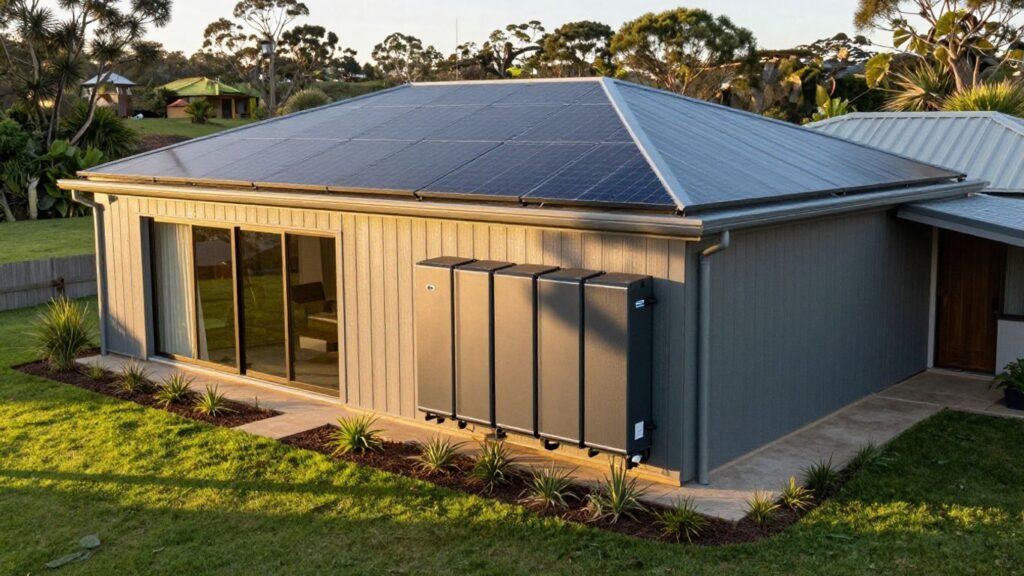
Here are the most important things to remember about the cost and value of solar battery systems in Australia for 2026. These points will help you make a smart decision for your home’s energy needs.
Key Takeaways
- The average installed cost for a 10kWh solar battery system in 2026 is around $8,000, but prices vary based on capacity, brand, and installation.
- Government rebates and state-specific incentives can significantly reduce the upfront cost of a solar battery system.
- The payback period for a solar battery typically ranges from 5 to 10 years, influenced by energy usage, electricity prices, and incentives.
- Beyond financial savings, batteries offer crucial benefits like blackout protection, increased energy independence, and a smaller environmental impact.
- Choosing the right battery size and technology (like LFP vs. NMC) is vital for maximising value and long-term performance.
Understanding The Cost Of A Solar Battery System In Australia
So, you’re thinking about getting a solar battery in Australia for 2026? It’s a big step, and the first thing on most people’s minds is, ‘How much is this going to set me back?’. It’s not a simple question with a single answer, because the price tag can swing quite a bit.
Average Solar Battery System Prices In 2026
Generally speaking, you’re looking at a pretty significant investment. For a decent 10-14 kWh system, which is a good size for most Aussie homes, you might be shelling out somewhere between $8,000 and $13,000, even after any government discounts are applied. Premium, all-in-one units can push that price even higher, starting from around $11,000 and going up. Smaller 5kWh systems might seem cheaper upfront, starting from about $4,000, but they often end up costing you more per unit of energy stored over time. It’s a bit like buying in bulk – bigger usually means better value per kWh.
What Is Included In The Solar Battery System Cost?
When you get a quote, it usually covers a few key things. You’ll get the battery itself, of course, and a compatible inverter (sometimes it’s a hybrid one that does both solar and battery). The installation by a qualified professional is almost always bundled in, along with getting it all set up and talking nicely with your existing solar panels. But watch out – sometimes you might need extra bits like a switchboard upgrade, special mounting gear, or if you want it to kick in during a blackout, that can add to the bill too. It’s always good to get a clear breakdown of what’s included and what’s not.
Cost Per Usable Kilowatt-Hour Explained
While the total price is important, a more useful way to look at it is the cost per usable kilowatt-hour (kWh). Think of it as the price you pay for each bit of energy you can actually store and use from the battery over its lifespan. This metric helps you compare different systems more fairly. As a rough guide, you might start seeing prices around $800 per usable kWh, but this figure usually drops quite a bit for larger battery systems. So, a bigger battery might cost more overall, but it could be a smarter buy in the long run.
Understanding the true cost involves looking beyond the sticker price. It’s about the value you get over the battery’s life, considering how much energy you’ll actually use and the savings you’ll make.
Here’s a general idea of what you might expect for different battery sizes:
- 5kWh Battery: Starting around $4,000. Good for smaller needs, but higher cost per kWh.
- 10kWh Battery: Typically from $8,000 upwards. A popular choice for many homes.
- 13.5kWh Battery: Often starting from $10,800. Offers more storage capacity.
Remember, these are just ballpark figures, and actual prices can vary. It’s always best to get a few quotes from reputable installers to see what works for your specific situation and budget.
Factors Influencing Solar Battery System Pricing
So, you’re thinking about getting a solar battery. Great! But before you get too excited, let’s talk about what actually makes the price tag what it is. It’s not just a one-size-fits-all situation, and understanding these bits and pieces can save you a headache (and some cash) down the track.
Battery Capacity And Its Impact On Price
This is probably the biggest one. Battery capacity is measured in kilowatt-hours (kWh), and it basically tells you how much energy the battery can store. Think of it like the size of a water tank – a bigger tank holds more water. For most homes just looking to cut down their electricity bills, a battery between 16-20 kWh is often the sweet spot. If you’re thinking about trading energy or want serious backup, you might look at something larger, say 30-50 kWh. Naturally, the more kWh you want, the higher the price will be. It’s a pretty straightforward relationship, but it’s worth knowing that the government rebates are starting to favour smaller systems a bit more now, so that’s something to keep in mind.
Brand, Technology, And Warranty Considerations
Just like with cars or phones, different brands have different price points. Premium brands often use better materials and newer tech, which usually means they cost more upfront. Then there’s the technology itself – lithium-ion is the standard, but within that, there are variations. Also, don’t forget the warranty. A longer warranty period, often 10-15 years, usually comes with a higher price tag, but it also means more peace of mind and potentially more savings over the battery’s life.
Installation Complexity And Location
Where you live and how easy it is to install the battery can also affect the cost. If your roof is tricky to work on, or if the battery needs to be installed in a hard-to-reach spot, you’re likely looking at higher labour costs. Some areas might also have different permit requirements or local regulations that add to the overall expense. It’s not just about the battery itself, but the whole process of getting it safely hooked up and running.
Inverter Compatibility And Upgrades
If you already have solar panels, you’ll need to make sure your current inverter can talk to the new battery. Sometimes, you might need a new inverter, or an upgrade to your existing one, to make everything work together smoothly. This is especially true if you’re looking at a system where the battery and inverter are separate units (AC-coupled) rather than integrated (DC-coupled). Trying to pair a massive battery with a tiny inverter is a common trap to avoid. It’s always best to get advice on this to avoid unexpected costs later on.
The price of a solar battery isn’t just about the unit itself. You’ve got to factor in the size you need, the brand you choose, how complicated the installation will be, and whether your existing gear will need an upgrade. Thinking about these things upfront helps you get a more accurate picture of the total cost.
Maximising Value: Solar Battery System Rebates And Incentives
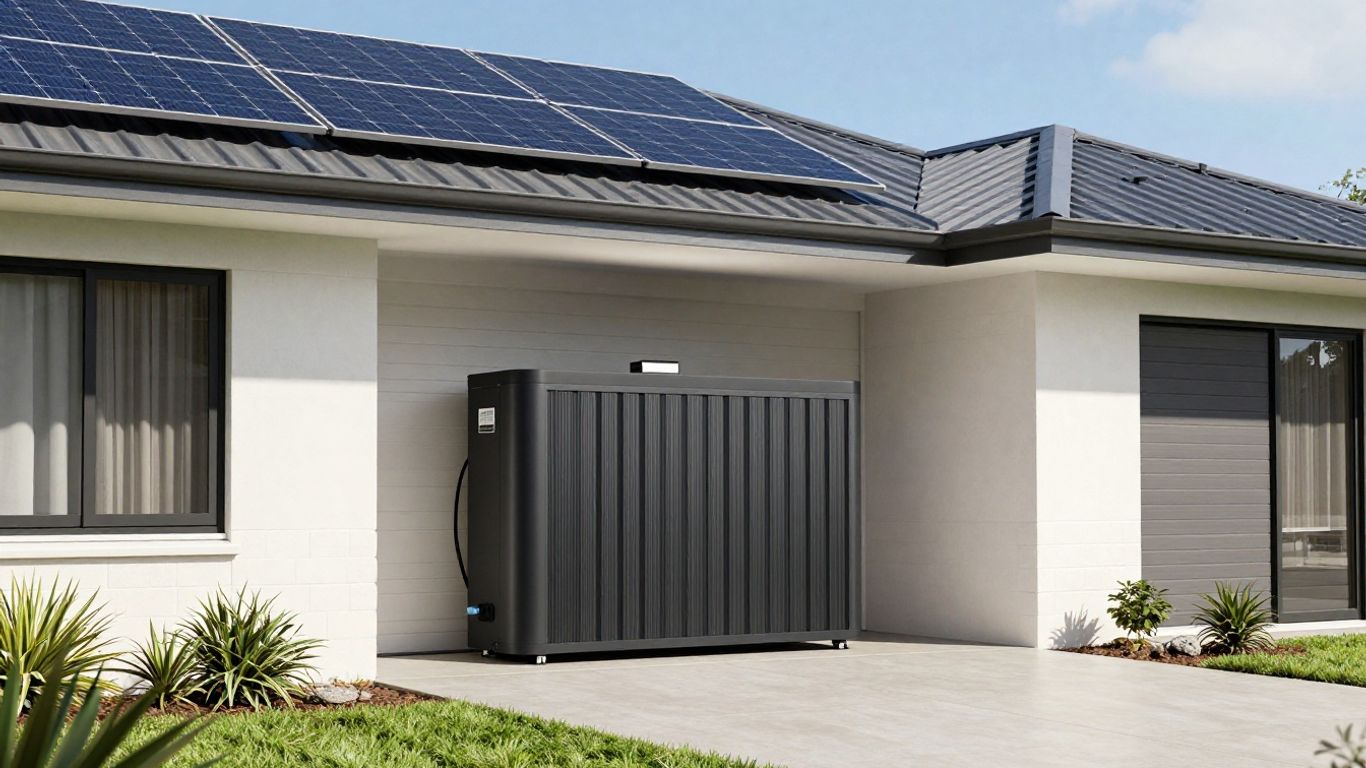
So, you’re thinking about getting a solar battery system in Australia. That’s a big step, and let’s be honest, the upfront cost can feel a bit daunting. But here’s the good news: there are quite a few ways the government and other organisations are trying to make it more affordable for us. Taking advantage of these incentives can seriously slash the initial price tag and speed up how long it takes for your system to pay for itself.
Federal Battery Rebate Program Details
Australia has a federal program designed to help households get a solar battery. It’s a pretty decent chunk of change, but it’s important to know how it works. The rebate value isn’t fixed forever; it actually steps down over time, meaning the sooner you get in, the more you might save. Also, there’s a tiered structure – the first portion of your battery’s storage capacity gets a better rebate rate than the extra capacity you add on.
Here’s a simplified look at how the rebate might be applied (note: exact percentages can change, so always check the latest figures):
- First 14 kWh: Gets the highest rebate percentage.
- Next 14 kWh (up to 28 kWh): Receives a lower rebate percentage.
- Remaining capacity (up to 50 kWh): Gets a smaller rebate percentage.
This setup encourages people to choose a battery size that genuinely suits their needs, rather than just going for the biggest one possible. To be eligible, you generally need to have solar panels already installed. You can find out the current rebate value using online calculators, which are super handy.
State-Specific Incentives And Loans
On top of the federal help, many states and territories offer their own sweeteners. These can come in the form of direct rebates, interest-free loans, or other financial assistance. For example, Victorian residents might be able to claim significant savings through a combination of federal and state programs. It’s definitely worth doing your homework to see what’s available where you live. These state-based offers can often be combined with the federal rebate, meaning even bigger savings.
Some common types of state incentives include:
- Direct Rebates: A straightforward discount on the purchase price.
- Interest-Free Loans: Allows you to spread the cost over time without paying interest.
- Stamp Duty Concessions: Reductions on taxes associated with purchasing property or goods.
Virtual Power Plant Participation Benefits
Virtual Power Plants (VPPs) are a bit of a game-changer. Basically, they group together a bunch of home batteries and manage them collectively to support the electricity grid. When you sign up your battery to a VPP, you can often get some pretty good perks. Sometimes, this is an upfront discount on the battery itself, which is great for reducing that initial cost. Other times, you get paid for allowing the VPP to use your battery’s stored energy during peak demand times. It’s like earning a bit of extra cash while helping keep the lights on for everyone else. It’s a smart way to get more bang for your buck from your solar battery investment. You can find comparisons of different VPPs to see which might suit you best, and some even offer lucrative rates for exporting energy during peak times.
Getting a solar battery is a significant investment, and while the technology is fantastic, the cost can be a hurdle. Thankfully, the Australian government and various state bodies recognise this. By actively seeking out and applying for all the rebates, incentives, and loan programs you’re eligible for, you can make the transition to home battery storage much more financially accessible. It’s not just about saving money now; it’s about making a smart, long-term decision for your household’s energy future.
Assessing The Financial Viability Of A Solar Battery System
So, you’re thinking about a solar battery. It’s a big purchase, no doubt about it. But is it actually going to save you money in the long run? That’s the million-dollar question, isn’t it? Let’s break down how to figure out if it’s a smart financial move for your household in 2026.
Calculating The Solar Battery System Payback Period
This is probably the most important number you’ll look at. The payback period is simply how long it takes for the savings generated by your battery to equal the initial cost of the system. Think of it like this: if you spend $10,000 on a battery and it saves you $1,000 a year, your payback period is 10 years.
It’s not just about the upfront cost, though. You’ve got to factor in:
- Your electricity usage patterns: How much power do you use at night when the sun isn’t shining?
- Your solar system’s size: Is it big enough to reliably charge the battery?
- Your electricity tariff: Are you on a flat rate or a time-of-use plan? This makes a huge difference.
- Feed-in tariffs: What are you getting paid for excess solar sent back to the grid?
Generally, in Australia, you’re looking at an average payback period of around 6 to 12 years for a solar battery system. This can vary quite a bit, though. Some sources suggest that with the right setup and incentives, you might see a payback in as little as 8 years. It’s definitely worth doing your homework or getting a professional to crunch the numbers for your specific situation. Remember, solar panels alone typically have a shorter payback period, often between 3 to 5 years.
Daily And Annual Savings Potential
Okay, so how much can you actually save? This is where things get a bit more detailed. A 16 kWh home battery, for instance, might save you around $1,500 per year in most Australian states. But again, this isn’t a hard and fast rule. It really depends on how you use the stored energy.
Are you using it to avoid buying expensive electricity from the grid during peak times? Or are you using it to power your home overnight, reducing your reliance on grid power altogether? The savings can also be influenced by whether you’re foregoing a feed-in tariff by using your own stored solar power instead of exporting it.
Smart energy management systems can really help here. They can monitor grid prices in real-time, charging your battery when electricity is cheap and then using that stored power when prices are high. This intelligent scheduling maximises your savings and makes the whole system more efficient.
When Solar Panels Alone Might Suffice
Sometimes, adding a battery might not be the most financially sensible move. If your electricity bills are already pretty low thanks to a decent solar panel setup, and you don’t use a huge amount of power overnight, you might be better off just sticking with solar panels.
If your solar array is quite old or not large enough to consistently charge a battery, you might need to consider upgrading your panels first. It’s all about getting the best bang for your buck. For many, the savings from solar panels alone are significant enough to make the investment worthwhile without the added complexity and cost of a battery. You can explore solar panel options to see if they meet your needs.
Beyond Financials: The Broader Benefits Of Solar Battery Systems
While saving money on your electricity bill is often the main driver for getting a solar battery, there’s a whole lot more to it. These systems offer a sense of security and independence that goes beyond just the dollars and cents.
Ensuring Blackout Protection and Grid Stability
Let’s face it, power outages are a pain. Whether it’s a storm knocking out the grid or just a local fault, being left in the dark isn’t fun. A solar battery system can act as your personal backup generator. When the grid goes down, your battery can automatically kick in, keeping your essential appliances running. This means your fridge stays cold, your lights stay on, and you can even keep your internet going. It’s not just about your home, either. Widespread battery adoption helps stabilise the grid itself, making it more resilient to disruptions.
Achieving Greater Energy Independence
Having a solar battery means you’re less reliant on the big energy companies. You can store the solar power you generate during the day and use it whenever you need it, even at night or on cloudy days. This self-sufficiency is a big deal for many Australians. You gain more control over your energy usage and aren’t as exposed to unpredictable price hikes from the grid. It’s about taking charge of your power needs and making your home more self-reliant.
Reducing Your Carbon Footprint
By storing and using your own solar energy, you’re directly reducing your need to draw power from fossil fuel sources. This means a lower carbon footprint for your household. It’s a tangible way to contribute to a cleaner environment and support the transition to renewable energy. Every bit of solar energy you use instead of grid power helps.
Enhancing Property Value
Installing a solar battery system can actually make your home more attractive to potential buyers. It’s seen as a modern, cost-saving, and environmentally friendly upgrade. Homes with solar and battery storage are increasingly in demand, potentially leading to a quicker sale and a better price. It’s an investment that pays off not just for you, but for future owners too.
Beyond the immediate financial returns, a solar battery system offers peace of mind through blackout protection, greater control over your energy supply, and a positive contribution to environmental sustainability. These broader benefits contribute significantly to the overall value proposition of adopting solar battery technology in Australian homes.
Choosing The Right Solar Battery System For Your Home
So, you’ve crunched the numbers and decided a solar battery makes sense for your place. Awesome! But now comes the big question: which one? It’s not a one-size-fits-all deal, and picking the wrong one could mean you’re not getting the most bang for your buck. Let’s break down how to figure out what’s best for you.
Determining The Optimal Battery Size
This is probably the most important bit. How much juice do you actually need to store? It really boils down to your household’s electricity habits. Think about how much power you use overnight, especially during those cooler months when heating might be on. A good starting point for most homes looking to cut down on grid power is often between 16-20 kWh. If you’re thinking about potentially making money by feeding power back into the grid during peak times (Virtual Power Plant participation), you might want to look at something larger, maybe 30-50 kWh. However, keep in mind that government rebates might favour smaller systems these days.
Here’s a rough idea, but remember to check your own usage:
| Household Type | Recommended Battery Size (kWh) | Primary Goal |
|---|---|---|
| Small Household | 10-15 | Faster Payback |
| Average Household | 16-20 | Bill Reduction |
| Large Household/EV User | 20+ | Max Bill Reduction/VPP |
It’s worth measuring your actual overnight power usage. You can often get this data from your electricity provider’s smart meter or a dedicated solar monitoring system. This will give you a much clearer picture than just guessing.
Key Considerations For Battery Brands
When you start looking at brands, you’ll see a lot of options. Some names pop up more often than others, and that’s usually for a reason. You’ll want to look at:
- Warranty: How long is it covered for? What does it actually cover? Some warranties are based on usage (how many times it’s charged and discharged) and others on time. A longer, more comprehensive warranty is generally better.
- Performance: How efficient is it? Does it have good safety features? Look for brands that have a solid track record and positive reviews from installers and other homeowners. You can find some helpful comparisons on sites that score different solar batteries.
- Compatibility: Will it work with your existing solar setup? Some batteries are designed to be ‘battery-ready’ from the start, while others might need a bit more work (and cost) to integrate. This is where understanding AC-coupling versus DC-coupling comes in handy.
- Support: What happens if something goes wrong? Is there good local support available?
Understanding Battery Chemistry: LFP Vs NMC
Most home batteries you’ll see in Australia use lithium-ion technology, but there are two main types you’ll hear about: Lithium Iron Phosphate (LFP) and Nickel Manganese Cobalt (NMC). They both store energy, but they have different characteristics:
- LFP Batteries: These are generally considered safer, have a longer lifespan (more charge cycles), and are often more environmentally friendly as they don’t use cobalt. They might be a bit heavier and slightly less energy-dense than NMC, but for most home use, they’re a really solid choice.
- NMC Batteries: These tend to be lighter and more energy-dense, meaning they can pack more power into a smaller space. However, they can be more prone to thermal runaway (though still very rare with modern safety systems) and often have a shorter lifespan compared to LFP. They were the dominant technology for a while, but LFP is gaining a lot of traction.
For most homeowners, especially those looking for reliability and longevity, LFP batteries are becoming the preferred option. It’s worth discussing these differences with your installer to see what aligns best with your specific home battery needs.
Conclusion
So, is a solar battery system worth it in Australia in 2026? For many households, the answer is leaning towards a strong yes. While the initial cost of a solar battery system can seem high, the combination of government rebates, falling technology prices, and rising electricity rates makes the financial case more compelling than ever. Beyond the dollars and cents, the added benefits of energy independence, blackout protection, and a reduced carbon footprint are significant. It’s not just about saving money; it’s about taking control of your energy future. By carefully considering your energy needs, exploring available incentives, and choosing a reputable system, a solar battery can be a smart, long-term investment for your home and the planet.
Frequently Asked Questions
How much does a solar battery system typically cost in Australia in 2026?
In 2026, you can expect the average installed cost for a solar battery system to start around $4,000 for a 5kWh system and climb to $20,000 for a 25kWh system. A popular 10kWh system usually sits between $8,000 and $12,000, but remember these prices often include government rebates.
What exactly is included in the price of a solar battery system?
Usually, the price covers the battery itself, a compatible inverter, and the professional installation by a qualified person. Sometimes, you might need extra things like switchboard upgrades, which could add to the total cost.
Are there any government help or discounts available for solar batteries?
Yes, definitely! Australia has federal battery rebate programs, and many states offer their own incentives or special loans. These can really cut down the amount you have to pay upfront.
How long does it take for a solar battery to pay for itself?
Generally, a solar battery system pays for itself in about 6 to 10 years. This can be faster if you use a lot of electricity at night, take advantage of incentives, or if electricity prices keep going up.
Is a solar battery system worth it if I already have solar panels?
If you already have solar panels, a battery can help you use more of your own solar power, especially at night, reducing your reliance on the grid. It adds benefits like blackout protection and greater energy independence, making it a good addition for many.
What's the difference between LFP and NMC battery types?
LFP batteries are generally safer and last longer, though they might cost a bit more. NMC batteries can store more energy for their size and are often cheaper, but they tend to degrade a bit faster over time.